Superbike8.co.uk – The ultimate bike search engine and price comparison site

Superbike8.co.uk – The ultimate bike search engine and price comparison site
Flat Pedals

Flat pedals give you a broad, open platform to place your foot on, without a cleat or a pedal-binding mechanism. They are common on mountain bikes, BMX bikes and many everyday or touring bikes because you can put a foot down quickly and reposition it easily. Read more
Showing all 8 results


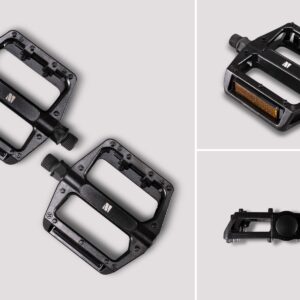
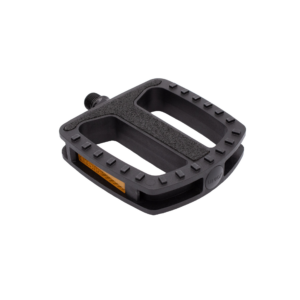


The right pair should suit your shoes, riding style and crankset, as well as providing the amount of grip and support you actually need.
Flat pedals differ in platform dimensions and shape, pin layout, body material and bearing construction. A compact, low-profile design may suit a rider who values clearance on technical trails, while a broader platform can give a larger contact area under a suitable shoe. More aggressive pins can improve grip on rough ground, but may be uncomfortable when walking the bike or make pedal strikes harder on your shins.
On SuperBike8 you can compare available flat pedals and retailer offers. Check that you are comparing the same model and included parts, and look closely at compatibility and dimensions rather than relying on appearance alone. Once you have chosen an offer, you continue to the retailer; ordering, payment, delivery, returns, warranty and customer service are handled directly by that retailer.
Flat pedals are one type of bike pedal. If you want to compare other pedal options, you can also view pedals or clipless pedals. The wider accessories category covers other cycling equipment.
How to choose flat pedals
Start with the kind of riding you do and the shoes you plan to wear. A pedal that works well for a mountain-bike ride in grippy flat-pedal shoes may feel less secure with smooth-soled trainers. Likewise, pins that feel useful when riding a rocky trail can be unnecessarily sharp for a commuter who regularly walks around town. Consider your normal routes, how often you put a foot down and whether you prioritise grip, a comfortable platform or a low-profile shape.
| Riding need | Features to compare | Possible compromise |
|---|---|---|
| Trail and mountain-bike riding | A stable platform, useful grip-pin placement and a shape that suits your shoe | Longer or more prominent pins can catch shoes and cause painful contact with your legs |
| Commuting and everyday use | A practical platform that is comfortable with the footwear you wear most often | A very smooth pedal may feel slippery in wet conditions or with hard-soled shoes |
| BMX and active riding | A shape and grip arrangement that let you move your feet and regain contact confidently | The preferred size and pin feel depend on your shoes, riding technique and clearance needs |
| Mixed surfaces and leisure rides | A balanced platform with enough grip for rough paths but not an overly aggressive feel | A middle-ground design may not offer the most specialised feel for either technical trails or walking-heavy use |
Platform size, shape and foot support
A pedal platform needs to support your foot in a position that feels stable, but bigger is not automatically better. Compare the stated platform dimensions where available and consider how they relate to your shoe size and sole shape. A broader body can spread pressure across more of the shoe and make it easier to find the pedal after lifting your foot. It can also add bulk, increase the chance of striking rocks or kerbs and feel awkward if you prefer a compact pedal.
The outline and profile matter alongside the measurements. Some pedals have a relatively flat surface; others have a shaped or concave contact area intended to help the shoe settle between the edges and pins. Your foot position, shoe stiffness and pin arrangement all affect how secure that feels. Product descriptions may use terms such as concave, convex or low profile, but these do not guarantee a particular fit for every foot. If possible, compare the shape with the pedals you currently use and check the dimensions rather than judging from a product photograph.
Think about ground clearance too. On uneven trails, a pedal body that sits lower or extends further from the crank can be more exposed to rocks. A more compact design may help reduce pedal strikes, although it offers less area underfoot. The best balance depends on your bike, crank length, riding position and the terrain you encounter.
Pins and grip: match the pedal to your shoes
Pins create contact points between the pedal and shoe sole. Their number, position, height and replaceability vary between models. More pronounced pins can hold a suitable flat-pedal shoe securely when riding over bumps, but they can also be harsh on ordinary footwear and on your legs if the pedal slips. A rider who wants to reposition their feet frequently may prefer a less aggressive setup than someone prioritising a locked-in feel on rough descents.
Check whether pins are fixed or replaceable and whether the product includes spare pins or the tools needed to adjust them. Replaceable pins can be useful if they become damaged or worn, but the exact replacement parts must match the pedal. Some pedals allow pin height to be adjusted by changing the pin or fitting washers; this is model-specific, so follow the manufacturer's instructions rather than assuming every pedal can be set up this way.
Footwear is part of the grip system. Flat-pedal cycling shoes generally use a sole designed to engage with pedal pins, while many casual trainers have smoother rubber or a tread pattern that does not sit as securely. A very soft or flexible sole can also make a small platform feel less comfortable on longer rides. If you ride in ordinary shoes, prioritise a pedal whose grip is appropriate for that footwear and be cautious about using long, sharp pins.
Materials and construction
Flat-pedal bodies are commonly made from metal or a reinforced plastic composite, but the exact material and design differ by model. Aluminium bodies can offer a rigid, durable platform, while composite bodies can be a practical choice for riders looking for a different balance of cost, weight and impact behaviour. Neither material is automatically best: body shape, pin design, axle and bearing construction all contribute to how a pedal performs and wears.
Pedals can be damaged by repeated impacts with rocks, kerbs or the ground. If you ride technical trails, consider whether the body is likely to be exposed to frequent strikes and whether replaceable pins or serviceable internal parts matter to you. A plastic composite body may show scratches or gouges differently from a metal one; cosmetic wear is not necessarily a sign that a pedal is unsafe, but cracks, looseness or damage around the axle require attention.
Bearings and bushes affect how the pedal rotates and how it can be maintained. Designs vary in the type and number of internal components, and some are easier to service than others. Look for manufacturer information on maintenance and replacement parts if you expect to keep the pedals for a long time or ride regularly in wet, muddy conditions. Dirt and water can contribute to wear, so periodic cleaning and checks are useful whatever the construction.
Compatibility with your crankset
Before comparing styling or grip features, confirm the pedal axle fits your crank arms. Many adult bike pedals use a 9/16-inch thread, while some BMX cranks use a 1/2-inch thread. Do not assume that a pedal fits because it looks similar to your current one: check the product specification and your crankset, especially when replacing pedals on a BMX or another bike with a non-standard setup.
Check the thread direction during installation. The right pedal tightens clockwise and the left pedal tightens anticlockwise when viewed from the outside of the bike; the left pedal has a reverse thread. Starting a pedal at the wrong angle or forcing it into the crank can damage the threads. Use the correct pedal spanner or hex key for the model, apply suitable grease to the threads unless the manufacturer instructs otherwise, and follow the maker's installation guidance.
Also check what is included in the offer. The listing should make clear whether it is a pair or a single pedal, and whether pins or any specific fittings are supplied. Do not infer this from photographs alone. When comparing prices, match the same version, colour and contents so that you are not comparing a complete pair with a single replacement pedal.
Use case, comfort and riding conditions
For trail riding, grip and a stable foot position are often priorities, but traction should not come at the expense of safe foot movement. You need to be able to reposition your foot when needed, and a pedal that grips too aggressively for your technique or footwear may be difficult to adjust. Consider platform shape and pin height together rather than choosing solely by the number of pins.
For commuting, touring and general leisure cycling, think about how the pedals feel with the shoes you wear every day. A moderate grip pattern may be easier to live with than an aggressive trail design, particularly if you walk frequently or ride in ordinary trainers. Wet weather can make smooth soles and smooth pedal surfaces feel less secure, so consider the combination of your footwear and pedal surface rather than relying on one feature alone.
For longer rides, foot comfort depends on more than platform area. Shoe fit, sole stiffness, saddle position and how your feet sit on the pedals all play a part. If you experience recurring discomfort, a larger platform will not necessarily solve it; check that your foot is positioned naturally and that your shoes are suitable for the ride. A wider pedal can also feel wrong if it places your feet farther apart than is comfortable.
Care and signs of wear
Rinse mud from the pedals after dirty rides and avoid directing high-pressure water at the axle area, where it may affect internal lubrication. Check periodically for loose pedals, missing or bent pins, unusual play and rough rotation. If the pedal feels loose at the crank, first establish whether the pedal itself or the crank threads are affected; continuing to ride with a loose connection can cause further damage.
Maintenance options differ by model. Some pedals have serviceable bearings or replaceable internal parts, while others are intended to be replaced when worn. Use the manufacturer's instructions for disassembly, lubrication and replacement parts. If the body is cracked, the axle is bent or the pedal has significant play that cannot be corrected, do not rely on it for a ride until it has been checked or replaced.
Comparing prices and model versions
Retailers can list different prices for the same pedal, and colours or product versions may be discounted differently. On SuperBike8 you can compare available products and retailer offers, then continue to the retailer you choose. Check the exact model name, colour, quantity and included components before treating two offers as equivalent.
Older colourways or previous-year versions may be less expensive and can still suit your needs. However, product names can remain similar while details change between versions, so check the specification for platform dimensions, pin design, materials and maintenance information. Include any delivery costs shown by the retailer when comparing the overall price. SuperBike8 is a price comparison site, not a retailer; ordering, payment, delivery, returns, warranty and service are handled by the respective retailer.
Typical buying mistakes with flat pedals
- Choosing by appearance without checking the platform dimensions or shape.
- Assuming every pedal has the same axle thread; confirm compatibility with your crankset.
- Buying very aggressive pins for smooth-soled shoes or a ride that involves a lot of walking.
- Choosing a broad platform without considering ground clearance and pedal strikes.
- Assuming a larger pedal will automatically solve foot discomfort.
- Overlooking whether pins are fixed or replaceable and whether replacement parts are available.
- Comparing a single pedal with a pair, or overlooking what is included in the offer.
- Assuming similar product names mean identical specifications across model years.
- Fitting the left pedal into the right crank arm, or forcing a pedal that has not started threading correctly.
- Ignoring delivery costs when comparing retailer offers.
Three typical buying decisions for Flat Pedals
1. Trail rider who wants secure grip
Compare pedals with a stable platform, a pin layout that suits your flat-pedal shoes and a shape that gives your foot a clear resting position. Consider whether the pins can be replaced and whether the pedal's profile suits the clearance available on your bike. Avoid selecting the most aggressive pins by default if you need to move your feet often or have frequent pedal contact with your legs.
2. Commuter using everyday trainers
Prioritise a practical platform and a grip pattern that works with the soles you actually wear. A very sharp, high-pin design may be unpleasant when walking or if your shoe sole is not designed for it. For wet-weather riding, assess the grip of the whole shoe-and-pedal combination, and make sure the pedal is comfortable for regular starts and stops.
3. Rider replacing worn or damaged pedals
Check the crank thread, compare the dimensions with your current pedals and decide whether you want to retain the same platform feel or change it. Confirm whether the offer is for a pair and whether pins or replacement parts are included. When fitting the new pedals, observe the left and right thread directions and follow the manufacturer's installation instructions.
Your checklist before you order
- Is the pedal intended for your riding style and the conditions you normally ride in?
- Have you checked the platform dimensions and shape against your shoe size and preference?
- Will the pin design suit your footwear and desired level of grip?
- Are the pins fixed or replaceable, and are replacement parts available if needed?
- Have you considered pedal clearance on your bike and the risk of strikes on rough ground?
- Is the pedal body material and construction appropriate for how you ride and maintain your bike?
- Have you checked the axle thread against your crankset?
- Is the offer for a pair or a single pedal?
- Are the colour, model version and included parts the ones you intend to compare?
- Have you checked manufacturer information for servicing and installation?
- Are retailer delivery costs included in your price comparison?
- Do you understand that ordering, payment, delivery, returns, warranty and service are handled by the retailer?
Frequently asked questions about Flat Pedals
Are flat pedals suitable for beginners?
Yes. They let you place and remove your feet without attaching a cleat to the pedal, which many riders find straightforward for learning and everyday cycling. Choose a platform and pin design that work with your shoes and riding conditions.
Can I use ordinary trainers with flat pedals?
Yes, but grip depends on the sole material and tread as well as the pedal pins. Smooth or hard soles may feel less secure, particularly in wet conditions. Flat-pedal cycling shoes are designed to work with pedal platforms, but the right choice depends on how and where you ride.
Are larger flat pedals always more comfortable?
No. A larger platform can provide more contact area, but comfort also depends on shoe fit, sole stiffness, foot position and the pedal's shape. A broad pedal may add bulk or reduce clearance, so compare its dimensions with your footwear and bike.
Do flat pedals fit every crankset?
No. Pedal axle threads must match the crank arms. Many adult bike pedals use a 9/16-inch thread, while some BMX cranks use a 1/2-inch thread. Check the product specification and your crankset before ordering.
Which way do flat pedals tighten?
The right pedal tightens clockwise and the left pedal anticlockwise when viewed from outside the bike. The left pedal has a reverse thread. Start each pedal carefully by hand and do not force it if it does not thread smoothly; follow the manufacturer's installation guidance.
How do I compare flat-pedal offers on SuperBike8?
Compare the exact model, colour, platform specification and included parts, and check whether the offer is for one pedal or a pair. Retailer prices and delivery costs can differ. When you choose an offer, you continue to the retailer, which handles ordering, payment, delivery, returns, warranty and customer service.