Superbike8.co.uk – The ultimate bike search engine and price comparison site

Superbike8.co.uk – The ultimate bike search engine and price comparison site
Mountain Bikes
Showing the single result
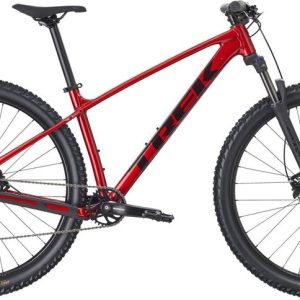
Mountain bikes are designed for riding away from smooth roads, where loose surfaces, roots, rocks and steeper gradients call for control, grip and a durable set-up. The category covers bikes with different suspension layouts and geometries, from straightforward hardtails to full-suspension models, as well as bikes intended for cross-country riding, trail riding or more demanding descents. The right choice depends less on how a bike looks than on the terrain you actually ride and how much climbing, distance and technical handling your rides involve.
Start by deciding where you will ride most often. A hardtail has front suspension and a rigid rear end, which keeps the design relatively simple and can suit forest tracks, bridleways and cross-country routes. A full-suspension bike adds rear suspension to help the wheels track rough ground, but it is usually more complex and its suitability depends on the suspension design and intended riding. Tyre clearance, gearing, brakes, frame fit and the quality of the suspension components all affect how a mountain bike feels once the surface gets rough.
On SuperBike8 you can compare mountain bikes and retailer offers before choosing an offer and continuing to the retailer. Compare the exact model, size, colour and specification rather than relying on a model name alone: details can vary between versions and model years. Ordering, payment, delivery, returns, warranty and customer service are handled directly by the respective retailer.
Choose a mountain bike for the riding you do
Think about the surface, gradient and pace of your usual rides. A bike that is comfortable on a canal path may not have the suspension, braking or geometry you want for repeated steep descents. Equally, a bike built for very rough trails can feel like more than you need if most of your riding is on firm tracks and gentle hills. Match the bike to your regular routes first, then consider occasional rides that may ask for more capability.
| Typical riding | What to prioritise | Possible trade-off |
|---|---|---|
| Forest tracks, bridleways and cross-country routes | Manageable weight, efficient pedalling, useful climbing gears and suitable front suspension | A lightweight, climbing-focused set-up may be less composed on very rough descents |
| Mixed trails with repeated climbs and descents | Balanced geometry, dependable brakes, grippy tyres and suspension suited to the terrain | More capable components and suspension can add weight and require more maintenance |
| Steep, technical or especially rough trails | Stable handling, suspension appropriate to the intended use, strong braking and robust components | A descending-focused bike may feel less lively on long climbs or smoother rides |
| A mix of riding, including everyday journeys | Comfortable fit, sensible gearing and practical details such as mounting points if needed | A mountain bike's wide tyres and off-road set-up may roll less efficiently on tarmac than a bike designed for roads |
If your routes are mainly paved or involve long stretches of road, compare other bike types as well. Depending on the intended use, gravel bikes, cross bikes or city bikes may better suit those journeys. For a wider overview, browse bikes.
Hardtail or full-suspension mountain bike?
Suspension affects comfort and control, but it is not a simple measure of how good a bike is. Consider the terrain, your experience, how you climb and how much maintenance you are prepared to take on. Check the complete bike specification: suspension travel, fork adjustment, frame layout and component level can differ substantially between models.
Hardtails
A hardtail has a suspension fork at the front and no rear suspension. The more straightforward frame layout often means fewer moving parts to inspect and maintain, and direct pedalling response can be helpful on smoother climbs and cross-country routes. A hardtail can be a sensible option if you want one bike for tracks and moderate trails without the extra complexity of rear suspension. It will not isolate your back wheel from bumps in the same way as a full-suspension bike, so line choice, tyre pressure and body position remain important on rough ground. See the Hardtail Mountain Bikes category for that suspension layout.
Full-suspension bikes
A full-suspension bike has a suspension fork and a rear shock linked to a moving rear frame section. On rough trails, the rear suspension can help the back wheel follow the ground and may improve comfort and traction. The benefit depends on the design, set-up and terrain; rear suspension is not automatically an advantage for every rider. These bikes have additional pivots and a shock that need appropriate inspection and servicing. They can also be heavier or more expensive than a comparable hardtail, so consider whether your regular routes make use of the added capability.
Suspension, geometry and control
Suspension travel describes how far the wheel can move through the suspension system, but more travel is not always better. A shorter-travel set-up may suit pedalling and faster, less technical routes, while greater travel can be useful for rougher terrain and repeated impacts. The frame geometry and suspension tune influence how a bike climbs, turns and feels on descents, so avoid choosing by a single specification in isolation. If the details are not clear in a retailer listing, check the manufacturer’s model-year specification before comparing offers.
Suspension also needs to be set for the rider. Forks and rear shocks may have adjustments for air pressure, rebound or other characteristics, depending on the component. Set-up that is too firm can reduce comfort and grip; a setting that is too soft can use suspension travel too readily and affect handling. Follow the component or bike manufacturer’s instructions, and do not assume that a particular setting or service interval applies to every model.
Geometry affects riding position and handling. A longer, more stable design can feel reassuring at speed and on descents, while a more compact or upright position may feel easier to manoeuvre at lower speeds. A bike that feels stable on a steep trail may feel less quick to change direction on tight turns. Compare the manufacturer’s geometry information, including reach and stack where available, but use it alongside a size recommendation and, if possible, a test ride. Geometry figures are most useful when comparing bikes of a similar type and size.
Wheels, tyres and grip
Wheel size influences the way a mountain bike rolls over obstacles and responds to changes in direction, but it should not be treated as a stand-alone quality ranking. Common mountain bike wheel sizes include 27.5" and 29". A 29" wheel can roll over uneven ground smoothly, while a 27.5" set-up can feel more compact and quick to manoeuvre for some riders. The frame size, geometry, tyre choice and intended use all affect the result. Some bikes use different wheel sizes front and rear, so check the exact model specification rather than assuming both wheels match.
Tyres affect grip, rolling resistance and comfort. Wider or more aggressively treaded tyres can offer useful traction on loose or muddy surfaces, but may feel slower on firm ground. A faster-rolling tread may suit dry tracks and cross-country riding but provide less bite when conditions turn slippery. Check the tyre width, tread pattern, casing and whether the frame and fork have clearance for any future tyre change. Tubeless compatibility depends on the specific rims, tyres and valves; do not assume a bike is supplied set up tubeless just because its components can support it.
Tyre pressure is another part of the set-up. The right pressure depends on the tyre, rim, rider, terrain and whether the system uses inner tubes or is tubeless. Too much pressure can make rough surfaces feel harsh and reduce grip; too little can increase the risk of tyre damage or loss of control. Follow the tyre and wheel manufacturers’ guidance and make adjustments cautiously for your riding conditions.
Brakes, gears and components
Mountain bikes commonly use disc brakes, but disc brake designs and component levels vary. Hydraulic systems use fluid to transfer force from the lever, while mechanical systems operate through a cable. The right system depends on the complete specification, maintenance needs and riding conditions. For steep trails or wet weather, consistent braking and appropriate brake set-up matter; check the rotor and brake details on the exact model rather than assuming that all bikes in the category have identical equipment.
Gearing should suit the steepness of your routes and your preferred cadence. A wide-range cassette can make steep climbs easier, while closer gear steps may feel more consistent when riding at a steady pace on less varied terrain. The number of chainrings is not enough to judge the range: compare the chainring and cassette sizes if these are listed. Also consider replacement parts and care. Mud, grit and water can accelerate drivetrain wear, so regular cleaning and lubrication help preserve shifting performance.
Component levels can vary even within a similar frame design. Check the fork, shock if present, brakes, drivetrain, wheels and tyres as a complete package. A high-level component in one area does not necessarily mean every part has the same specification. For riding that involves frequent impacts, durability and serviceability may matter more than saving a small amount of weight; for long climbing rides, weight and efficient pedalling may carry more importance.
Frame material and finishing kit
Aluminium is common on mountain bikes and can offer a practical balance of weight, stiffness, durability and cost. Frame design and tube shaping affect how a particular bike rides, so the material name alone does not determine comfort or performance. Carbon frames may be used on some models to reduce weight or achieve particular design characteristics, but they can cost more and should be inspected after a significant impact. Neither material removes the need to check the frame for damage and follow the manufacturer’s care guidance.
Finishing kit includes parts such as the handlebar, stem, grips, saddle and seat post. Their dimensions and shape influence comfort and control, and some may be changed to achieve a better fit. A dropper seat post, where fitted, lets a rider lower the saddle for descents and raise it for pedalling, but it adds a component that needs correct installation and maintenance. Check whether a listed feature is included on the exact version rather than relying on a photograph, which may show a different build or an accessory not included with the bike.
Mountain bike sizing and fit
A good fit helps you control the bike, pedal comfortably and move around the frame on varied terrain. Frame labels such as S, M and L are not standardised across manufacturers: the same nominal size can have different reach, stack, seat tube length and handling. Use the size chart for the specific make and model, and compare your height and inside leg measurement with its guidance. If you are between sizes, consider the manufacturer’s advice and the riding position you prefer rather than automatically sizing up or down.
Reach gives an indication of the horizontal room between the bottom bracket area and the front of the frame, while stack relates to the vertical height of the front end. These figures can help explain why two bikes labelled the same size feel different. Saddle height and handlebar position can be adjusted within limits, but they cannot correct every mismatch in frame size or geometry. A test ride, where available, can help you assess the position and handling; check the retailer’s information for the bike’s size and assembly details.
For younger riders, do not choose a frame or wheel size solely so that a child can grow into it. A bike that is too large can make starting, stopping and controlling the handlebars difficult. Use the manufacturer’s size recommendations and assess reach to the controls, saddle adjustment and confidence when mounting and dismounting. The separate Youth Bikes category may also be relevant.
Electric mountain bikes
Some mountain bikes are electric-assist models, while others have no motor or battery. If considering an e-mountain bike, compare the motor, battery, controls and the way assistance suits your routes. A larger battery may add weight, and range depends on factors including terrain, assistance level, rider and conditions; do not rely on a single advertised range figure as a guarantee of your own ride distance. Check the exact specification and the retailer’s information for charging, care and what is included.
In the UK, an electrically assisted pedal cycle must meet the applicable EAPC requirements to be treated as an ordinary pedal cycle on public roads. Rules depend on the bike’s specification and use, and other requirements may apply to different electric vehicles. Check current official guidance and the model’s compliance information before riding; this is not legal advice.
Care, wear and long-term ownership
Off-road riding exposes a bike to grit, water and impacts. After a muddy ride, clean the frame and drivetrain without directing high-pressure water at bearings, suspension seals or other sensitive areas. Dry and lubricate the chain as appropriate, and check the brakes, tyres and wheels before the next ride. A clean bike is also easier to inspect for loose fasteners, cuts, cracks or other damage.
Suspension components and pivots need care suited to the bike and component manufacturer’s instructions. A hardtail has no rear shock or suspension pivots, but its fork still needs appropriate attention. Brake pads, tyres, chain and cassette are wear items; how quickly they wear depends on use, conditions and maintenance. If you ride in wet or gritty conditions regularly, allow for more frequent cleaning and inspection. For work beyond your experience, ask a qualified bike mechanic or the retailer about suitable service options.
Compare mountain bike prices and versions
Retailers can list different prices for the same bike, and discounts may vary by size, colour or model year. A previous-year model or colourway can be a worthwhile option if its specification and fit meet your needs. However, bikes with similar names can have changes to the fork, drivetrain, brakes, wheels or frame details between years. Compare the complete specification and model year before deciding that two offers are equivalent.
On SuperBike8 you can compare available products and retailer offers, then select an offer and continue to that retailer. Check that you are comparing the same frame size, colour and version, and take delivery costs into account when assessing the total price. Read the retailer’s listing to confirm what is included, whether the bike is delivered partially assembled and what assembly the retailer offers. Ordering, payment, delivery, returns, warranty and service are handled by the retailer, not SuperBike8.
Typical mountain bike buying mistakes
- Choosing a bike for an occasional extreme ride rather than the terrain you ride most often.
- Assuming full suspension is automatically better, without considering weight, cost, maintenance and route type.
- Picking a frame size from an S/M/L label without checking the specific manufacturer’s size chart.
- Judging wheel size without considering frame fit, geometry, tyres and handling.
- Assuming that a photograph shows the exact components or accessories included in the listed version.
- Comparing bikes with similar names but different model years or specifications as though they were identical.
- Ignoring tyre tread and clearance, even though they affect grip, rolling speed and possible future tyre choices.
- Focusing on the number of gears rather than the actual range of chainring and cassette sizes.
- Overlooking brake condition and specification when the bike will be ridden on steep or wet trails.
- Forgetting to include delivery costs and to check assembly requirements when comparing retailer offers.
- Buying a bike that is too large for a young rider to control safely and confidently.
Three typical buying decisions for Mountain Bikes
1. A straightforward bike for forest tracks and local bridleways
If most rides are on firm tracks, moderate hills and less technical trails, prioritise a suitable fit, dependable brakes, practical gearing and tyres that match the surfaces. A hardtail may provide the simpler set-up you need without paying for rear suspension that your routes rarely use. Check that the fork and component specification still suit the roughest sections you regularly ride.
2. A versatile bike for mixed trails and regular descents
If your rides include uneven ground, repeated climbs and technical descents, consider how the suspension design, geometry and tyres work together. A capable hardtail may be enough for a rider who enjoys an active riding style and accepts more impact through the rear wheel; a full-suspension model may offer additional comfort and traction on rougher routes. Compare maintenance needs and the exact components as well as the frame layout.
3. A model offered at different prices or in an older version
When comparing retailer offers, confirm the size, colour, model year and full specification before focusing on price. An older colour or previous-year model may be attractive if it has the features you need, but check for changes to its fork, brakes, drivetrain or wheels. Include delivery costs and confirm how much assembly is required before selecting an offer.
Your checklist before you order
- Have I matched the bike to the trails and surfaces I ride most often?
- Do I want a hardtail or full-suspension design, and do my routes justify the extra complexity?
- Have I checked the manufacturer’s size chart for this exact model?
- Do the reach, stack and riding position look suitable for my body and preferred handling?
- Have I checked the wheel size and whether the model has matching or mixed-size wheels?
- Are the tyre width and tread appropriate for my usual terrain and conditions?
- Is there enough tyre clearance for any future tyre change I may want?
- Do the suspension components suit my riding, and have I checked their set-up and care requirements?
- Are the brakes and gearing suitable for the climbs and descents on my routes?
- Have I checked the exact frame material, components, colour and model year?
- Does the listing include any accessories or features shown in its photographs?
- Have I compared the same size and specification across retailer offers?
- Have I included delivery costs and checked the retailer’s assembly information?
- For an electric model, have I checked the motor, battery, included equipment and applicable UK requirements?
- Do I understand that ordering, payment, delivery, returns, warranty and service are handled by the retailer?
Frequently asked questions about Mountain Bikes
What is the difference between a hardtail and a full-suspension mountain bike?
A hardtail has a suspension fork at the front and a rigid rear end. A full-suspension bike also has rear suspension. Hardtails are generally simpler in layout, while rear suspension can help the back wheel follow rough ground. Which is preferable depends on your routes, fit, budget and willingness to maintain the suspension system.
Are 27.5" or 29" wheels better for mountain biking?
Neither size is best for everyone. A 29" wheel can roll smoothly over uneven ground, while a 27.5" set-up may feel more compact and quick to manoeuvre for some riders. Compare the complete bike, including frame size, geometry, tyres and intended use, rather than choosing on wheel diameter alone.
How do I choose the right mountain bike size?
Use the manufacturer’s size chart for the exact model and check its recommendations against your height and inside leg measurement. Sizes are not identical between brands, so an M in one range may not fit like an M in another. Reach and stack figures can help you compare fit, but a test ride is useful where available.
Can I ride a mountain bike on roads?
Yes, a mountain bike can be ridden on roads, but its wide, treaded tyres and off-road-focused position may roll less efficiently than a bike designed mainly for tarmac. If most of your riding is on paved routes, compare road-oriented options too and check whether the bike has the practical fittings you need.
Should I buy a previous-year mountain bike?
A previous-year version can be worth considering if its size, fit and specification suit you, and its price compares favourably with current offers. Check the exact model year because bikes with similar names can differ in components, colours or technical details.
What should I check when comparing mountain bike offers?
Confirm that offers refer to the same model year, frame size, colour and specification. Compare the fork, brakes, drivetrain, wheels and tyres, then factor in delivery costs and check the retailer’s information about assembly and what is included. You choose an offer on SuperBike8 and continue to the retailer; the retailer handles the purchase and after-sales arrangements.