Superbike8.co.uk – The ultimate bike search engine and price comparison site

Superbike8.co.uk – The ultimate bike search engine and price comparison site
Bike Racks

Bike racks can mean different things: a luggage rack fitted to a bicycle, a carrier used to transport bikes by car, or a stand for storing a bike. The right choice depends on which job you need it to do. For a bicycle luggage rack, frame mounts, wheel clearance and the kind of bags you plan to carry are central. Read more
Showing all 3 results
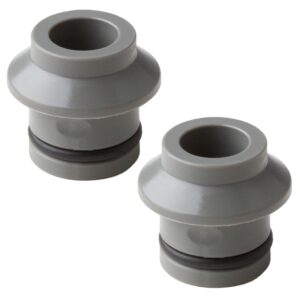
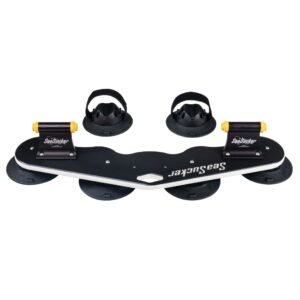
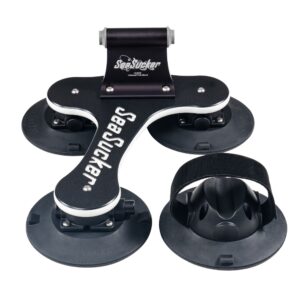
For a car carrier, you need to check how it attaches to your vehicle and how many bikes it is designed to transport.
Before comparing prices, identify the rack type and check the product details against your bike or vehicle. Similar-looking racks may differ in mounting points, permitted load, compatibility with disc brakes, wheel size or frame shape. A lower price is only useful if the rack fits and suits your intended use. On SuperBike8 you can compare products and retailer offers; once you choose an offer, you continue to the retailer. Ordering, payment, delivery, returns, warranty and customer service are handled directly by that retailer.
Use the listing information to confirm what is included and what you may need separately, such as mounting hardware or straps. If a specification is unclear, check with the retailer before choosing. You can also browse the wider range of bike accessories when planning a practical setup for everyday riding or touring.
Which type of bike rack do you need?
Start with the task rather than the name. A bicycle luggage rack carries panniers or other compatible loads on the bike. A car-mounted carrier transports bicycles on a vehicle. A storage rack supports or holds a bike when it is not being ridden. Product descriptions do not always use these terms consistently, so confirm the intended use before comparing models.
| Rack type | Best suited to | Main checks |
|---|---|---|
| Bicycle luggage rack | Carrying panniers or compatible luggage on commutes, errands and tours | Frame mounts, tyre and heel clearance, rack load limit, bag attachment system |
| Car-mounted bike carrier | Taking one or more bikes by car | Vehicle fit, attachment method, number and type of bikes, total load and access to lights or number plate |
| Storage rack or stand | Keeping a bike upright or supported at home or in a workspace | Where the bike is supported, available floor or wall space, bike weight and tyre or frame compatibility |
Do not assume a rack designed to carry luggage on a bicycle can transport a bike by car, or that a car carrier is suitable as a storage stand. If the listing does not make the purpose clear, look for the intended mounting position and the manufacturer’s compatibility information before proceeding.
Choosing a luggage rack for your bicycle
Mounting points and frame compatibility
Many conventional luggage racks attach to threaded eyelets near the rear dropouts and upper parts of the frame. Not every bike has these fittings, and their position can vary. Check the rack’s mounting instructions against your frame, including whether the stays can be adjusted to reach the available eyelets. A rack that appears to fit the rear wheel may still be incompatible if its supports cannot be attached securely.
Some racks use a seatpost clamp or another alternative mounting system. These can be useful when a frame lacks conventional rack eyelets, but they may have different load limits and can be less suitable for heavy panniers or rough riding. Follow the manufacturer’s stated use and load limit rather than assuming that all mounting systems carry the same amount.
Suspension frames, small frames and bikes with unusual frame shapes may need particular care. On a full-suspension bike, the rear triangle moves relative to the main frame, so a standard rack may not be appropriate. Check whether the rack is explicitly designed for that kind of bike. If your bike has carbon frame parts, follow the bike manufacturer’s guidance on clamping and accessories; do not tighten a clamp onto a carbon tube unless the instructions allow it.
Wheel, tyre and brake clearance
Compare the rack’s stated wheel and tyre compatibility with your bike’s actual setup. A wide tyre, mudguard or frame-mounted battery can reduce the space available around the wheel. Check clearance not only above the tyre but also around the rack stays, brake calliper and mudguard. A rack that fits a bare wheel may foul a mudguard once everything is installed.
Disc brakes can affect how the lower rack supports are routed or attached. Some racks are shaped or supplied with fittings to work around particular brake layouts, while others may not clear the calliper. Do not rely on a general claim such as “fits most bikes” if your bike has limited space; check the product’s detailed compatibility information and, where needed, ask the retailer.
For a front rack, verify fork compatibility especially carefully. Suspension forks and carbon forks may not be suitable for a rack that clamps to the fork legs. A front-loading setup can also change steering feel, particularly when the load is uneven or heavy. Use a front rack only within the bike and rack manufacturers’ stated limits.
Load capacity and how you carry luggage
Use the rack’s stated maximum load as a limit, not as a target to exceed. The bike itself may have a lower permitted load for its frame, fork or wheels, so the usable capacity is governed by the most restrictive relevant limit. Distribute luggage evenly from side to side and secure it so it cannot move into the wheel, spokes or brakes.
Think about how you will carry your belongings. Panniers need compatible attachment points and enough heel clearance when pedalling. A top platform may suit a rack-top bag or a strapped load, but check the fitting system and whether the rack includes the required parts. If you plan to switch between panniers and a rack-top bag, confirm that both can be fitted together without obstructing one another.
For regular commuting, consider whether the rack leaves room for the mudguards, rear light and any other equipment you use. For touring, stability, a suitable luggage attachment system and clearance for your chosen panniers matter more than choosing the lightest option by default. A rack’s own capacity does not automatically mean that every bag or accessory is compatible with it.
Material, construction and finish
Bike luggage racks are commonly made from aluminium or steel, though construction varies by model. Aluminium racks can keep the rack relatively light and resist corrosion in ordinary use, but a damaged or bent part may be difficult to repair. Steel racks are often heavier and can be repairable by a suitable workshop, but their finish needs care if it is chipped and the underlying metal is exposed. These are general tendencies, not guarantees: tube design, joints, coating and manufacturer instructions all affect durability.
For everyday riding in wet weather, inspect the finish periodically and keep mounting bolts secure. Road grit and moisture can collect around joints and fittings, particularly where a rack sits close to a mudguard. If you ride year-round, a robustly mounted rack and regular checks may be more useful than choosing on material name alone.
Choosing a carrier for transporting bikes by car
Car-mounted carriers attach in different ways, commonly at a towbar, on the roof or at the rear of the vehicle. Each method has practical trade-offs. Towbar carriers can be convenient for loading, but depend on a compatible towbar and may affect access to the boot. Roof carriers keep the rear of the car clear, but lifting bikes overhead can be awkward and the added height needs attention in car parks and garages. Rear-mounted carriers can be an option where the vehicle and carrier are confirmed as compatible, but attachment points and contact with the vehicle body need careful checking.
Confirm the exact vehicle fit rather than relying on a broad vehicle-type description. Check the number of bikes the carrier is designed for, the maximum load, how it holds different frame shapes and whether it accommodates your bike’s wheelbase, tyre width and frame size. E-bikes can be heavier than non-assisted bikes, so check both the carrier’s permitted load and the vehicle attachment’s limits. A carrier that fits a standard bike may not be suitable for a heavier or unusually shaped model.
After fitting, follow the carrier instructions for securing each bike and recheck straps and fastenings as directed. Make sure the bikes do not obstruct the driver’s view, lights or number plate. Check current UK requirements for your specific setup, and use appropriate lighting or a number plate arrangement where necessary. If you are unsure whether a carrier is suitable for your vehicle, check with the carrier manufacturer or retailer before using it.
Comparing bike racks and retailer offers
Compare like with like. A listing may describe a complete rack, a mounting kit, an extension or a single replacement part. Check the contents, especially if the product image shows fittings or accessories that may not be included. For car carriers, compare the same attachment type and bike capacity; for bicycle luggage racks, compare the same mounting arrangement and intended load use.
Retailers can offer different prices, and colour or model-year versions may be priced differently. Older versions can still be a practical choice, but specifications and included fittings may have changed under a similar product name. Confirm the exact model and version rather than assuming that two listings with similar names are identical. Delivery costs can also affect the total price, so review the retailer’s offer details before choosing.
On SuperBike8 you can compare products and retailer offers, then continue to the retailer you select. The retailer is responsible for ordering, payment, delivery, returns, warranty and customer service. For related equipment, you can also compare bike lights and other items in the accessories range.
Typical bike rack buying mistakes
- Buying a luggage rack when you need a carrier for a car, or confusing either with a storage stand.
- Assuming a rack fits because the wheel size looks right, without checking the frame mounts and tyre clearance.
- Ignoring mudguards, disc brakes, a rear light or other fittings that use the same space.
- Choosing a seatpost-mounted rack for a heavy load without checking its specific load limit and intended use.
- Assuming the rack’s maximum load is also the maximum permitted for the bike, wheels or vehicle.
- Forgetting to check whether pannier hooks, a top bag or mounting hardware are included and compatible.
- Buying a car carrier without confirming the exact vehicle fit, bike capacity and total load.
- Assuming a carrier suitable for a conventional bike can also carry a heavier e-bike.
- Comparing a complete rack with a listing for an adapter or replacement component as if they were equivalent.
- Choosing by price alone without checking the model version, included parts and retailer delivery costs.
Three typical buying decisions for Bike Racks
1. You want panniers for a regular commute
Start with a rear luggage rack that is compatible with your frame and the loads you plan to carry. Check for frame eyelets, disc-brake and mudguard clearance, heel space and the pannier attachment system. If your bike has no suitable eyelets, consider an alternative mounting design only after checking its stated limits and suitability for your commute load.
2. You need to take bikes on a family car journey
Choose the carrier type around your vehicle, how many bikes you need to transport and how easily you can load them. Confirm the exact vehicle compatibility, each bike’s fit and the carrier’s total permitted load. If carrying an e-bike, pay particular attention to weight limits and whether the carrier is designed for that use.
3. You need a rack for a bike without standard mounting eyelets
Look for a rack specifically designed for your bike’s available attachment points, such as a compatible seatpost-mounted option. Compare its load limit with your intended luggage and check that the mounting method is allowed for your frame material. If the listing does not confirm compatibility, ask the retailer or bike manufacturer rather than relying on appearance alone.
Your checklist before you order
- Have you confirmed whether you need a bicycle luggage rack, car carrier or storage rack?
- Does the rack’s stated purpose match how you plan to use it?
- Have you checked your bike frame or vehicle make and model against the product’s compatibility details?
- Are the required eyelets, clamps, straps or other mounting points available and suitable?
- Will the rack clear your tyres, mudguards, brakes, lights and other fitted accessories?
- For a luggage rack, is there enough heel clearance for your panniers?
- Is the rack’s load limit appropriate, and have you checked any lower limit for the bike or vehicle?
- Can your bags or bikes attach securely using the rack’s stated fitting system?
- Are all required fittings included, or is an additional mounting part needed?
- For a car carrier, will it obstruct lights or the number plate, and have you checked current requirements?
- Have you checked whether the product is a complete rack or only a component or adapter?
- Are you comparing the same model version and included parts across retailer offers?
- Have you considered delivery costs and checked the retailer’s offer details?
- Have you reviewed the installation and maintenance instructions before use?
Frequently asked questions about Bike Racks
How do I know whether a luggage rack fits my bike?
Check the rack’s mounting system against the fittings on your frame, then confirm clearance for the wheel, tyre, mudguards and brakes. Use the rack and bike manufacturers’ compatibility information, since frame designs and dimensions vary.
Can I fit a bike rack if my bike has no frame eyelets?
Some racks use alternative mounting systems, including certain seatpost-mounted designs. Their permitted loads and intended uses can differ from conventional racks, so check the product instructions and make sure the attachment is suitable for your frame.
Can I carry an e-bike on a car-mounted bike rack?
Only if the specific carrier and vehicle attachment are suitable for the bike’s weight and dimensions. Check the carrier’s load limits and instructions, and consider the combined load if carrying more than one bike.
Are panniers included with a bicycle luggage rack?
Not necessarily. Check the listing to see whether it contains the rack alone, a rack with fittings, or a bundle that includes bags. Also confirm that your panniers’ attachment system is compatible with the rack.
What should I check before fitting a car bike carrier?
Confirm that the carrier is approved for your vehicle and suitable for the number, type and combined weight of the bikes. Follow the fitting instructions and check that the load does not obstruct lights or the number plate. Refer to current UK requirements for your setup if you are unsure.
Does SuperBike8 sell or deliver bike racks?
SuperBike8 is a price comparison site where you can compare products and retailer offers. When you select an offer, you continue to the retailer; ordering, payment, delivery, returns, warranty and customer service are handled by that retailer.